
Overview
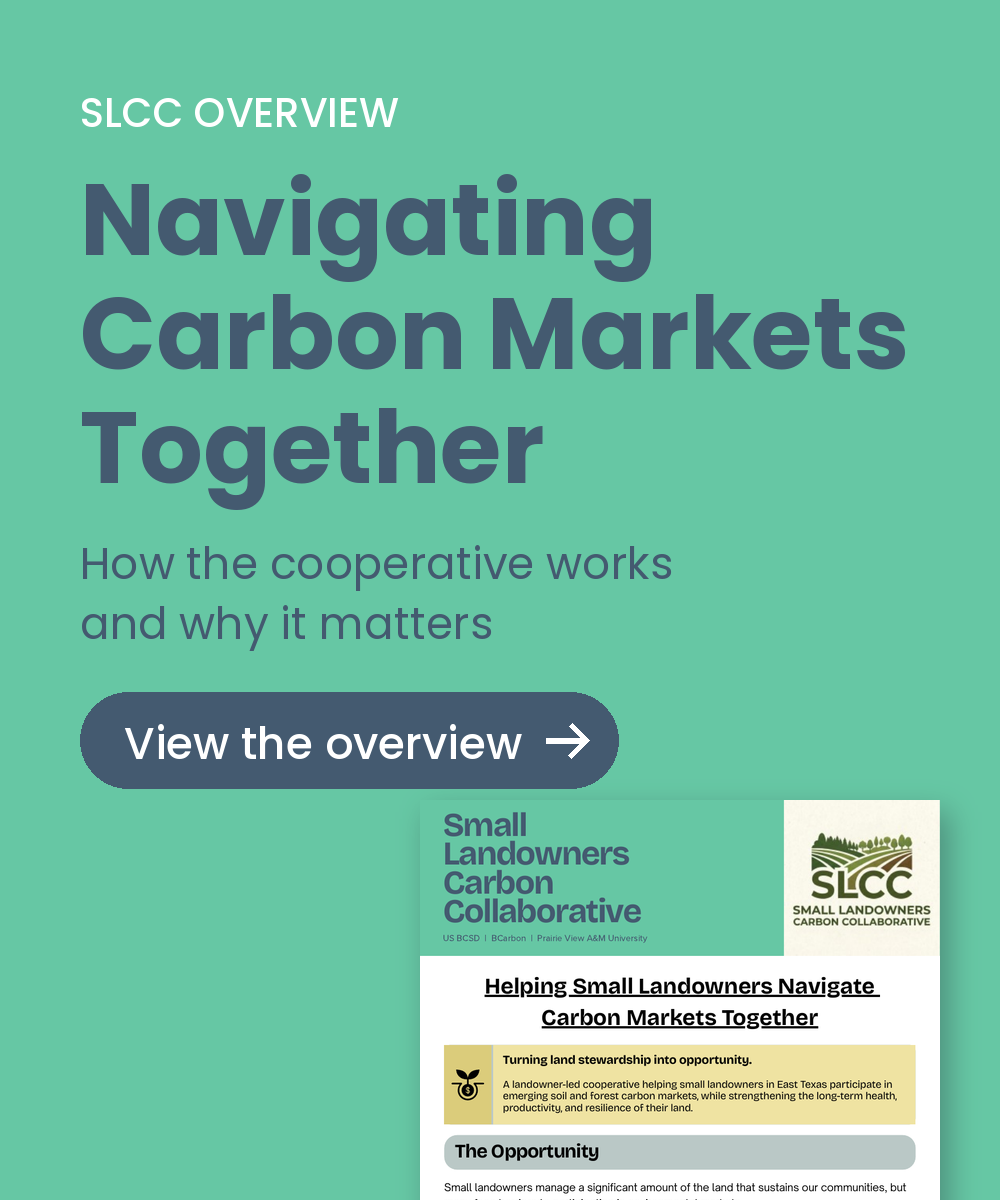
The Small Landowners Carbon Collaborative (SLCC) helps small-acreage forest landowners in East Texas take part in carbon and forest product markets. Individually, these landowners face verification costs and risks that keep them out. By pooling their land in a landowner-run cooperative, members share those costs and gain a new source of income from keeping their forests healthy.
The US BCSD works alongside BCarbon and Prairie View A&M University to build the model. A USDA Forest Service grant of more than $1.5 million now supports the effort through 2027. The grant advances the Forest Service goal of bringing landowners with fewer than 2,500 acres into climate markets.
Process
The SLCC began with outreach in East Texas communities: site visits, landowner meetings, and education on how carbon markets work. In parallel, partners researched the measurement methods and legal structure a fair cooperative would need.
The work now centers on a pilot group of landowners who will measure, report, and verify the carbon on their land and form the cooperative together. Shared verification lowers the up-front cost that most often keeps small landowners from enrolling.
Path to Scale
Idea (2022 to 2023): Partners studied why small landowners are largely absent from carbon markets and designed a cooperative model to close the gap.
Action (2024 to 2027): Outreach, a landowner pilot, and cooperative formation in East Texas, supported by the USDA Forest Service.
Scale (Next): A five-year next phase to grow membership, welcome companies with land in the region under bylaws that protect small landowners, and bring the model to new regions.
Key Partners and Supporters:


KEY ACTION AREAS & ONGOING WORK in Houston
Outreach & Education
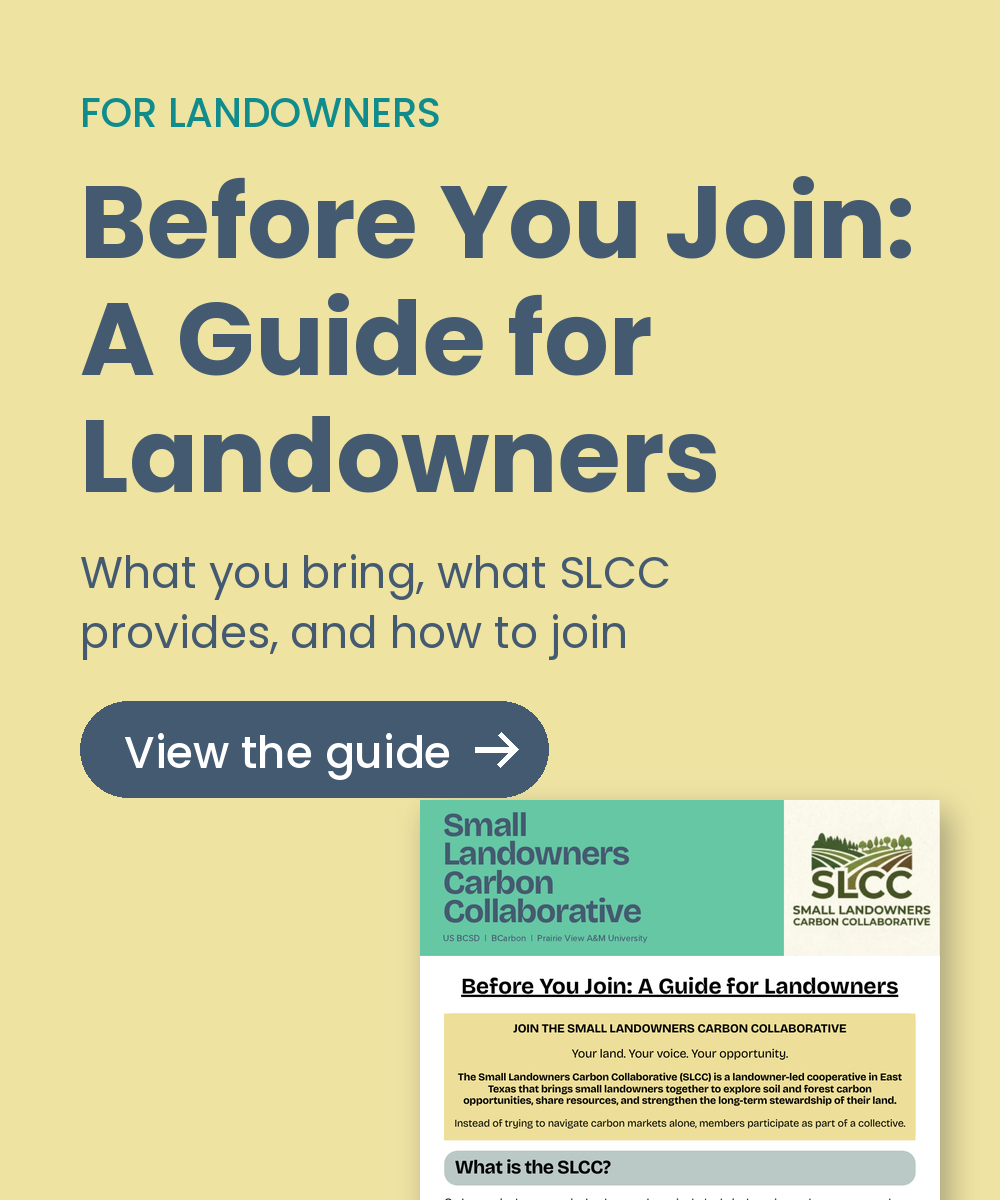
Meeting landowners where they are, with plain-language guidance on how carbon markets work and what joining involves.
Cooperative Structure
Building fair governance and bylaws that keep decisions and revenue in landowners' hands.
Measurement & Verification
Developing shared, affordable carbon measurement so landowners don't carry verification costs alone.
Market Access
Connecting the cooperative with credit buyers and forest product markets to create steady income.
Next Phase: Growing the Cooperative
Time to scale: a five-year path for small landowner carbon access
why it matters
Forests on small private holdings store large amounts of carbon, yet most carbon projects are built for owners of thousands of acres. Small landowners are left out of a growing market. SLCC is designed to change that by giving them collective scale without giving up control of their land.
What the next phase will do
Grow cooperative membership beyond the East Texas pilot group
Invite companies with land in the region to join, under bylaws that keep the cooperative fair to small landowners
Lower or share up-front verification costs, the biggest barrier landowners name
Document the model so other regions can adopt it
How companies can take part
Companies can join as land-holding members, buy credits generated by the cooperative, or fund landowner enrollment and verification. US BCSD connects member companies with these opportunities through its coalition network.