Lynda Clemmons from NRG and Jonathan Atwood from Unilever discuss how they’re using renewable energy to redefine customer relationships and grow their businesses.
Filmed on July 16, 2015 at Collaborating to Achieve Scale at Yale University.

Follow us on Twitter for more frequent updates!
Lynda Clemmons from NRG and Jonathan Atwood from Unilever discuss how they’re using renewable energy to redefine customer relationships and grow their businesses.
Filmed on July 16, 2015 at Collaborating to Achieve Scale at Yale University.
[themify_col grid="2-1 first"]
Scale is topic we're chasing today with the @wbcsd, @YaleCBEY and our members and colleagues. pic.twitter.com/Q95fK51y0z
— US BCSD (@USBCSD) July 16, 2015
-----
Stuart DeCew, program director for @YaleCBEY, on collaboration with the @wbcsd and @USBCSD. pic.twitter.com/JKAyFPCQg1 — US BCSD (@USBCSD) July 16, 2015
-----
Excited to have @AndrewWinston and @YaleFES professor Marian Chertow with us to talk about collaboration. pic.twitter.com/V8rNqRCb9d
— US BCSD (@USBCSD) July 16, 2015
-----
For Yale’s Natural Capital course, @WBBCSD & @USBCSD companies/representatives were involved as speakers & students http://t.co/Xrme0VGAib — Business&Enviro@Yale (@YaleCBEY) July 16, 2015
-----
Circular Economy needs a reliable supply of materials to reuse- and this includes a reliable infrastructure to make it available @USBCSD
— Edwin Pinero (@epsust) July 16, 2015
-----
Mathy Stanislaus, Assistant Administrator for the @usepagov's OSWER, on sustainable materials management. pic.twitter.com/UIKGOAfPyD — US BCSD (@USBCSD) July 16, 2015
-----
The Linear Economy pays money to bury value in landfills- we need a more Circular Economy to capture that value back into goods @USBCSD
— Edwin Pinero (@epsust) July 16, 2015
-----
75% of #materials are not accounted for in GDP: we need economic drivers to capture this value - Mathy Stanislaus pic.twitter.com/09U2Op5CII — Laura Franceschini (@LauraGFrance) July 16, 2015
-----
International collaboration enabled by great technology at the @YaleSOM. Roland Hunziker, EEB lead, @wbcsd in Geneva. pic.twitter.com/FWrDUZFVb0
— US BCSD (@USBCSD) July 16, 2015
-----
"Coopetition" is a great way to conceptualize how business will need to collaborate to scale up to curb climate change @wbcsd @YaleCBEY — Gary Dunning (@GDunningTFD) July 16, 2015
-----
Scaling Sustainable Solutions conference explores partnerships between biz & enviro leaders w/ @CBEY @USBCSD @WBCSD http://t.co/KYoUqwlxnC
— Yale SOM (@YaleSOM) July 16, 2015
-----
Live streaming now - @nrgenergy, @Unilever, @AndrewWinston and @YaleCBEY: https://t.co/oIC14vu4Wf pic.twitter.com/PWD29PDFIB — US BCSD (@USBCSD) July 16, 2015
[/themify_col]
[themify_col grid="2-1"]
John Bradburn @GM outlines progress w/ national & state materials management programs @USBCSD @wbcsd conf @Yale pic.twitter.com/W23JPrGqHa
— SuppliersPartnership (@SP4environment) July 16, 2015
-----
NRG & Unilever partnership a real meeting of the minds: sustainability folks & business folks working to implement the vision of their CEOs. — US BCSD (@USBCSD) July 16, 2015
-----
Jonathan Atwood at @Unilever sums up their long-term goal on renewables, "transition purpose to purchase." pic.twitter.com/VTBwiYuIgo
— US BCSD (@USBCSD) July 16, 2015
-----
Into afternoon breakouts now. Discussions on #EnergyEfficiency, #materials, #coastalresiliency, #climatesmartag & #sustainableforestry. — US BCSD (@USBCSD) July 16, 2015
-----
Nine @wbcsd #EnergyEfficiency in Buildings Labs have distilled out a handful of overarching barriers. pic.twitter.com/VQL3wNq3C8
— US BCSD (@USBCSD) July 16, 2015
-----
From #Waste to Opportunity: 20+ Companies Scale Up #Reuse w/ Nat’l #Materials Marketplace http://t.co/XazzrLRsnb @USBCSD @WBCSD @CEFecoforum — Laura Franceschini (@LauraGFrance) July 16, 2015
-----
Energy efficiency groups today have referenced this interview with Mr. Gerald Hines from our EEB-Houston lab: https://t.co/hObXGosatS
— US BCSD (@USBCSD) July 16, 2015
-----
Moving from project to enablers - @b0ydie, Brad Gentry (@YaleFES), @ecotone2, and Mathy Stanislaus (@EPA) talk scale. pic.twitter.com/f6GqqQBCe5 — US BCSD (@USBCSD) July 17, 2015
-----
Enjoyed talking #sustainability #communications with @wbcsd, @usbcsd, @yaleCBEY today: http://t.co/0ElEvVrWbs
— Paul Massey (@p_massey) July 17, 2015
-----
"We’re not a classical orchestra with a conductor up front. We’re an improv jam band that needs to listen to and build off of one another." — US BCSD (@USBCSD) July 17, 2015
-----
Just referenced in our finance discussion, Morgan Stanley's Sustainable Reality report: https://t.co/VPZ85IMoTf
— US BCSD (@USBCSD) July 17, 2015
-----
Obama’s #GHG action plan focused on public #health - this can be a more effective driver for policy than #climate change / @USBCSD @WBCSD — Business&Enviro@Yale (@YaleCBEY) July 17, 2015
[/themify_col]

Geneva, San Francisco, Austin, July 8, 2015: The National Materials Marketplace is a new joint pilot project led by the Corporate Eco Forum (CEF), US Business Council for Sustainable Development (US BCSD), and the World Business Council for Sustainable Development (WBCSD). Bringing together more than 20 major companies with operations in the United States, the project will help participants identify ways to reuse or exchange undervalued materials via an online database, and establish new circular supply chains.
“The increasing pressure on our natural resources sends a clear message: we need to find value in discarded materials. Growing cross-industry collaboration for the efficient use of our resources is promising. This opens up new business opportunities while creating economic, environmental, and societal benefits,” says Andrew Mangan, Executive Director of US BCSD.
“The Materials Marketplace project is a key step towards the shift to a circular economy - one where waste becomes the new engine for creating value,” says Peter Bakker, President and CEO of the WBCSD.
“Unlocking business-to-business reuse opportunities ensure effective waste management and deliver integrated benefits.”
The potential benefits of matching material and by-product waste streams with opportunities for reuse are massive. In recent years, General Motors has generated nearly $1 billion in annual revenue through reusing and recycling its by-products. By finding reuse and recycling options for this material, GM avoided over 10 million metric tons of CO2-equivalent emissions in 2014.
"Material management is a business opportunity, not just a cost-reduction strategy," adds John Bradburn, GM’s Global Manager of Waste Reduction. “We have to reach the stage where by-products are viewed the same way we view product development – part of constant improvement and innovation.”
The Marketplace is a unique collaboration among the three business associations. Originally conceived at a CEF member meeting, the idea gained momentum with the support of early advocates including GM and Nike. The national pilot builds upon a similar regional project in Austin, Texas, as well as other “by-product synergy” projects in North America, China and the United Kingdom over the past 20 years.
Amy O’Meara, Director of the Corporate Eco Forum explains: “US BCSD’s expertise and software were exactly what our members were looking for. And joining forces with US BCSD and WBCSD was a natural fit, given the significant complementarity of our memberships. By leveraging each of our organizations’ strengths, we can deliver increased value to participating companies.”
By joining the pilot, participating businesses benefit from:
Lessons learned from the pilot will be used to scale up materials reuse projects worldwide, notably through the WBCSD’s Global Network of national business councils.
Participating companies include: 3M; Armstrong World Industries; CH2M; Eastman Chemical; Essroc – Italcementi Group; Holcim-Geocycle; Goodyear; Fairmount Santrol; General Motors; Nike; Novelis – Aditya Birla Group; The Dow Chemical Company; Tetra Pak Inc.; Swisstrax; Systech; and many others.
[themify_hr color="light-gray" width="80%" border_width="1" ]
About the US BCSD The US BCSD is an action oriented and member-led business association that harnesses the power of collaborative projects, platforms and partnerships to develop, deploy and scale solutions to ecosystems, energy, materials and water challenges. US BCSD activities are designed to generate economic returns and address environmental and societal challenges. The US Business Council is one of 70 national councils worldwide associated with the World Business Council for Sustainable Development, a network of 200 companies with members drawn from 30 countries and 20 major industrial sectors. http://usbcsd.org
About CEF The Corporate Eco Forum (CEF) is an elite, invitation-only membership organization comprised mainly of Fortune and Global 500 companies from 18 industries with combined revenues of over $3 trillion. CEF provides a year-round safe, neutral space for influential executives to exchange best practice, collaborate, and innovate. Participants are almost exclusively VP and C-level executives across multiple business functions including CSOs, CTOs, CIOs, CFOs, CMO, and VPs for Supply Chain. The diversity of executives, coupled with the cross-industry nature of CEF, creates a world-class platform to accelerate sustainable business problem solving and innovation. http://corporateecoforum.com
About the World Business Council for Sustainable Development (WBCSD) The World Business Council for Sustainable Development (WBCSD), a CEO-led organization of some 200 forward-thinking global companies, is committed to galvanizing the global business community to create a sustainable future for business, society and the environment. Together with its members, the Council applies its respected thought leadership and effective advocacy to generate constructive solutions and take shared action. Leveraging its strong relationships with stakeholders as the leading advocate for business, the Council helps drive debate and policy change in favor of sustainable development solutions.
The WBCSD provides a forum for its member companies - who represent all business sectors, all continents and a combined revenue of more than $8.5 trillion, 19 million employees - to share best practices on sustainable development issues and to develop innovative tools that change the status quo. The Council also benefits from a network of 70 national and regional business councils and partner organizations, a majority of which are based in developing countries. http://wbcsd.org
The circular economy now has the backing of a papal mandate, thanks to Pope Francis's June 18th encyclical letter ("Laudato Si") concerning the environment. In only 2 years of papacy, Pope Francis has made headlines for his many progressive (and at times controversial) opinions regarding poverty, homosexuality, and interfaith dialogue. His newest focus is on the environment, decrying wasteful use of materials and endorsing the science behind human-driven climate change.
Stating that "Mother Earth... cries out to us because of the harm we have inflicted on her by our irresponsible use and abuse of the goods with which God has endowed her," Pope Francis acknowledges the negative impacts of unsustainable economic practices. His request for ecological reform heavily promotes the transition to a circular economy, demonstrated by his views that "our industrial system, at the end of its cycle of production and consumption, has not developed the capacity to absorb and reuse waste and by-products. We have not yet managed to adopt a circular model of production capable of preserving resources... while limiting as much as possible the use of non-renewable resources, moderating their consumption, maximizing their efficient use, reusing and recycling them."
He also stresses the importance of action vs. attitude by saying that "people may well have a growing ecological sensitivity but it has not succeeded in changing their harmful habits of consumption." He isn't speaking just to Catholics, but to everyone, saying "Humanity is called to recognize the need for changes of lifestyle, production, and consumption."
Pope Francis chose his name in honor of Saint Francis of Assisi, patron saint of the environment. He reflects this with his groundbreaking opinions on environmental reform, the full text of which can be found here. Perhaps this new Catholic doctrine will give zero-waste initiatives around the world a much-needed dose of divine intervention.
[themify_author_box avatar="no" style="gray rounded contact" ]
 This July 16-17 at Yale University, we’ll be asking you for your input on how financing can help scale up our collaborative sustainability projects and initiatives. We’ve assembles a small group of experts from finance and investment institutions, as well as government-funded green banks, to work with you on July 17th and respond to your experiences related to financial opportunities and barriers to scaling sustainability initiatives. We’ll discuss developments in debt, equity and unconventional financing tools.
The agenda for the two day event will also include discussions on a range of other US BCSD, WBCSD and Yale University projects and initiatives - view the full agenda and register at http://usbcsd.org/blog/events.
Can business make real progress on global environmental and social issues? Can businesses positively influence environmental and social trends while strengthening their own resilience to issues like climate change and resource scarcity? We think so - but we have to work together to get there.
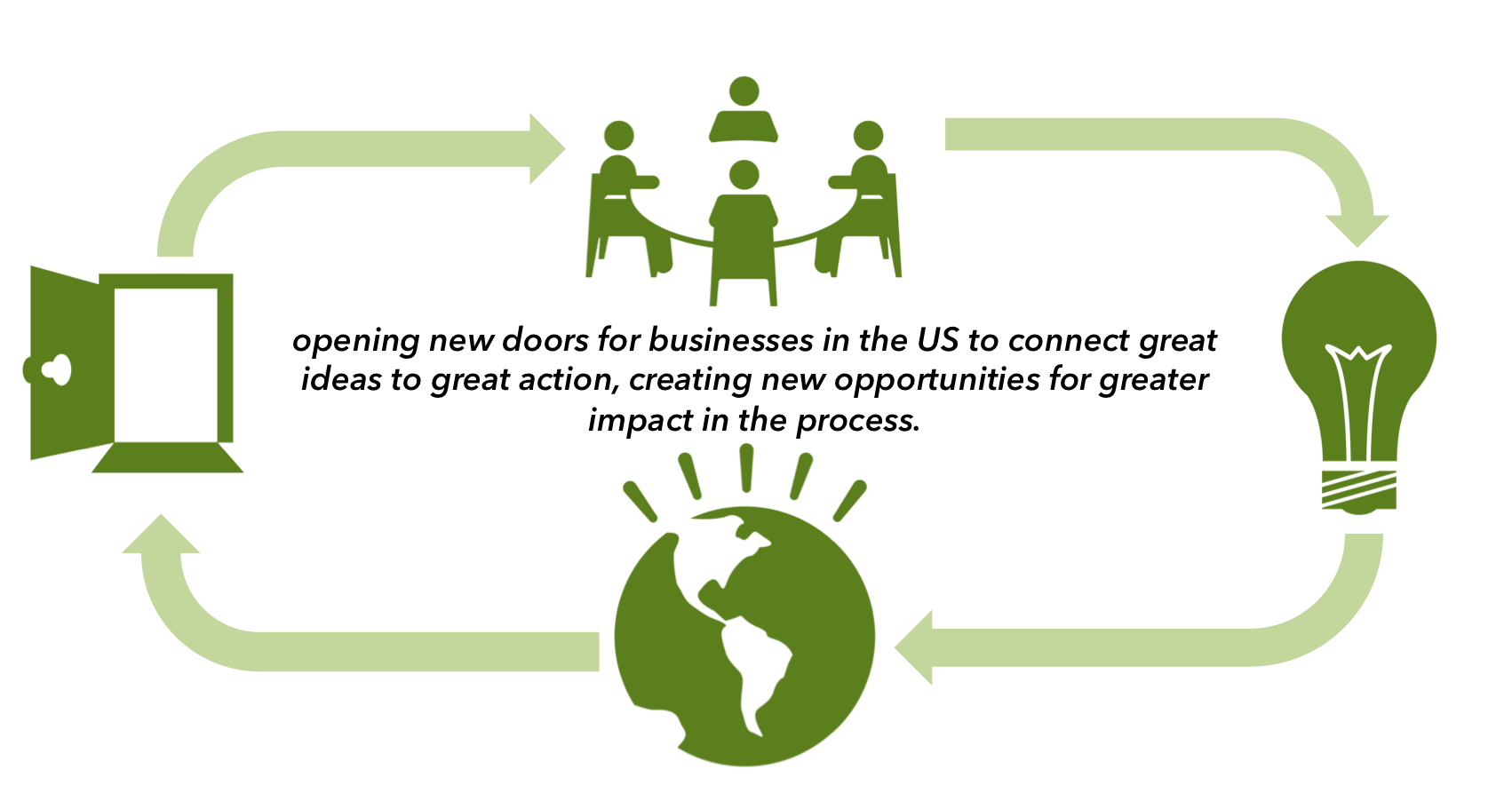
The WBCSD, US BCSD, and Yale University are walking the talk. We've engaged in new organizational collaborations that will help scale up impact by joining forces and leveraging our collective capabilities. For example, the US BCSD and WBCSD have engaged in a new level of collaboration to connect the WBCSD's thought leadership, breakthrough ideas, and realistic business approaches to the US BCSD's action-oriented project proving ground and implementation platform.
In this context of organizational collaboration, we invite US BCSD and WBCSD members, other businesses, Yale and Global Network for Advanced Management faculty and staff, and colleagues in our network to join us on July 16th and 17th at Yale University. Together we'll explore existing and emerging projects that demonstrate how these collaborations work in practice; discuss what's needed for scale in the context of finance, communications and technology; and create opportunities for peers across sectors to learn and gain from one another.
The agenda for these two days includes:
[themify_hr color="light-gray" width="100%" border_width="1" ]
Add the event to your calendar using the buttons below, and watch our website and twitter account for registration details.
[themify_col grid="3-1 first"]
[themify_button style="large yellow rounded" link="http://usbcsd.org/wp-content/uploads/2015/03/US-BCSD-WBCSD-Yale-Meeting.ics" ]Outlook Cal[/themify_button]
[/themify_col]
[themify_col grid="3-1"]
[themify_button style="large yellow rounded" link="http://usbcsd.org/wp-content/uploads/2015/03/US-BCSD-WBCSD-Yale-Meeting.ics" ]iCalendar[/themify_button]
[/themify_col]
[themify_col grid="3-1"]
[themify_button style="large yellow rounded" link="https://www.google.com/calendar/event?action=TEMPLATE&tmeid=aml2ZmVsajM0c3Nia3BiNGhhdmwzMDlnbm8ga2lldHplckB1c2Jjc2Qub3Jn&tmsrc=kietzer%40usbcsd.org" ]Google Cal[/themify_button]
[/themify_col]

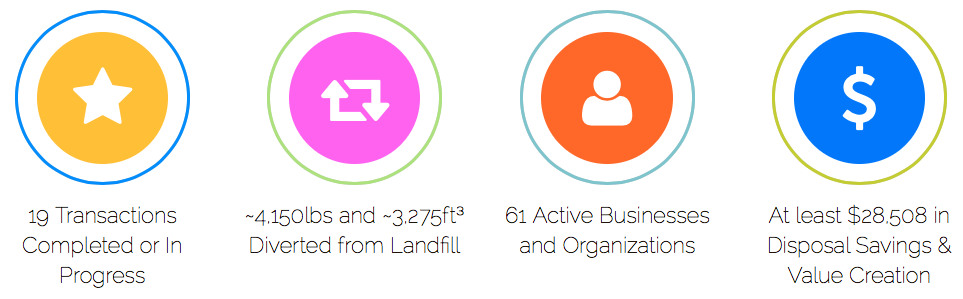 Visit http://austinmaterialsmarketplace.org to follow our progress.
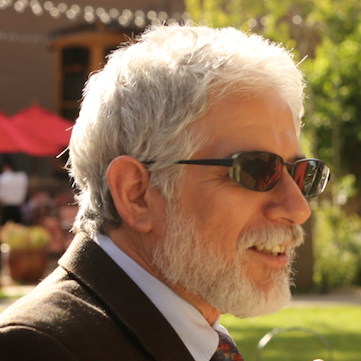 The United States Business Council for Sustainable Development (US BCSD) is pleased to announce that Scott Nadler is joining the Council as Program Director. Scott joins US BCSD to provide support in a number of areas including project coordination, membership development, and increased collaboration with the World Business Council for Sustainable Development (WBCSD).
The US BCSD is an action oriented and member-led nonprofit business association that harnesses the power of collaborative projects, platforms and partnerships to develop, deploy and scale solutions to ecosystems, energy, materials and water challenges.
The United States Business Council for Sustainable Development (US BCSD) is pleased to announce that Scott Nadler is joining the Council as Program Director. Scott joins US BCSD to provide support in a number of areas including project coordination, membership development, and increased collaboration with the World Business Council for Sustainable Development (WBCSD).
The US BCSD is an action oriented and member-led nonprofit business association that harnesses the power of collaborative projects, platforms and partnerships to develop, deploy and scale solutions to ecosystems, energy, materials and water challenges.
Scott brings a broad range of experience, including 20 years in environment and sustainability consulting to business with ERM, a leading global provider of environmental, health, safety, risk and sustainability services. Prior to ERM, Scott spent 15 years in industry and 5 years in state government. He has worked closely with the US BCSD for several years, including serving as a member of US BCSD’s Executive Committee.
“Over more than two decades, the US BCSD has created a unique organization and role in business sustainability”, said US BCSD Executive Director Andrew Mangan. “The Business Council focuses on projects rather than policy. We concentrate on turning great ideas into great actions. Increasingly, business sustainability efforts globally are turning to actions as well. The biggest challenge is to scale up those actions so business can have more meaningful impact on the world’s sustainability challenges. I’m delighted to have Scott join us to work in that effort.”
Scott will work with the US BCSD on a part-time basis. He remains a Partner with ERM.
On March 27th we presented a new initiative to engage Tennessee-based companies of all sizes to create closed-loop systems in which one company's waste is another company's raw material. As we ended the presentation, we put out a call to action for Tennessee businesses and organizations interested in the project to get in touch - if this means you, fill out this form!
During this hour long session, representatives from General Motors, the Tennessee Department of Environment and Conversation and the US Business Council for Sustainable Development (US BCSD) presented on:
Waste is just a resource out of place - lets work together to keep these high value resources out of the landfill and put them back into the hands of the Tennessee businesses that can use them best.
 Today marked a milestone for Texas’ clean energy economy. Travis County voted to adopt the Property Assessed Clean Energy (PACE) program, making it the first county in Texas to do so. This means Austin and the surrounding area will soon reap the economic and environmental benefits from giving energy-intensive, thirsty Texas a reprieve with water efficiency and clean energy.
"The US Business Council for Sustainable Development ignited interest in PACE in 2011 after working on its implementation in Connecticut and California. Two attorneys with the Thompson and Knight law firm, Jim Morriss and Stephen Block, learned of this innovative energy financing concept at a Tucson meeting of the US BCSD and became infected with the idea of making it happen in Texas," said Andrew Mangan, executive director of the US BCSD.
"Together we created a new organization called Keeping PACE in Texas, hired an executive director, Charlene Heydinger, who prepared the way for legislative action in the 2013 session. And now, after years of hard work, Travis County has stepped up as the first government in Texas to launch a PACE energy efficiency in buildings program," Mangan said.
What is PACE?
PACE, enacted during the 2013 Texas Legislature with support from both sides of the aisle, has the potential to unlock a considerable amount of private funding for clean energy projects in the state. Specifically, it is an innovative financing program – completely free of government mandates and public funding – that enables commercial, industrial, multi-family, and agricultural property owners to obtain low-cost, long-term loans for water conservation, energy-efficiency, and renewable energy projects. Participants will then repay these loans for clean energy projects through their property tax bill.
A PACE loan simultaneously offers building owners cheaper financing options and lenders secure repayment terms. In exchange for funds provided by a private lender to pay for the project, the property owner voluntarily requests that the local government place an assessment secured with a senior lien on the property until the assessment is paid in full. The assessment is owed to the local government, which forwards the payments to the private lender.
State Program, County Project, Local Support
Travis County Commissioners Gerald Daugherty (R) and Brigid Shea (D) united to cosponsor the resolution with tremendous support from a large local coalition of PACE advocates in Travis County, as well as by County Tax Assessor Collector Bruce Elfant.
This means that within the next several weeks, private funding for water and energy efficiency upgrades as well as renewable energy projects in Travis County will be unleashed for local businesses.
Benefits to Businesses
PACE has great potential to directly affect the bottom lines of small and medium sized businesses. To be eligible for PACE financing, a project must show that the savings in utility costs will offset the cost of installing the project. In most instances, this will result in an immediate positive cash flow. This mechanism can be used to equip buildings with the latest in efficiency technology, including lighting, HVAC, and water conservation tools. In addition, PACE can be used for renewable energy additions, such as roof-top solar panels.
Nationally, almost 75 percent of PACE projects were less than $250,000 in size, demonstrating PACE’s popularity as a tool for small and medium-size businesses. Further, these project installations lead to increased property value and lower utility bills, making PACE projects attractive for both property owners and tenants alike.
The Future of PACE in Texas
Texas now has its first PACE program. But it shouldn’t stop here in Travis County. The state of Texas accounts for about 12 percent of the entire country’s energy use, and Texas’ unique PACE framework makes implementation across the state easy and predictable. In the next few months, we’ll be looking to help other counties follow with PACE programs of their own. If you’d like to bring PACE to your county in Texas, please contact Keeping PACE in Texas.
 Houston, Texas, 4 March 2015 – An action plan designed to significantly improve the market competitiveness of Houston’s buildings and attract investments in energy efficiency was released today by the World Business Council for Sustainable Development (WBCSD) and the United States Business Council for Sustainable Development (US BCSD) at a ceremony at Rice University.
The action plan is based on the recommendations of the Houston Energy Efficiency in Buildings Laboratory (EEB Lab) held jointly by the WBCSD and the US BCSD in October 2014.
[themify_button style="xlarge yellow rounded" link="http://usbcsd.org/documents/EEB_Lab_Houston.pdf" ]Download the Report[/themify_button]
Research shows that energy savings of 30% from Houston’s commercial sector alone would contribute over half a billion dollars to the Houston economy. This is equivalent to the investment required to build 10 new mid-size power plants. Savings of this magnitude would add to the employment created by the increased activity in energy efficiency retrofits and other energy services, and could translate into nearly 20,000 new jobs over a five-year period.
The action plan is grouped into four themes and actions are targeted primarily at Class B and C building owners, who have less history of making EEB investments. All EEB Lab participants agreed that this market is a priority action area. Implementation will be driven by a team of local public and private sector leaders across the following areas:
While much remains to be done, proactive leadership from the City of Houston has helped to significantly improve the energy efficiency of its buildings. Overall, Houston is now ranked fifth in the US for the number of LEED certified projects within the city, and has a total of 369 LEED certified projects. Additionally, Houston mayor Annise Parker made a public commitment at the UN Summit on Climate Change on 23 September 2014, that Houston would cut CO2 emissions by 80% from 2005 levels by 2050.
To oversee the implementation process of the action plan, a new platform entitled Energy Efficiency in Buildings – Houston, has been established. Led by the WBCSD and the US BCSD, and managed locally by the Houston Advanced Research Center (HARC), a coalition of public and private sector volunteers will build and sustain the momentum. Key leaders from the Gulf Coast Green Building Council, the City Energy Project and Keeping Pace in Texas will convene and coordinate actions between stakeholder groups while providing governance to ensure effective implementation.
The platform will enable members to complement each other’s activities and exchange experiences; collaborate with the public sector on the development of a long-term energy-efficient buildings strategy; and engage in policy consultation through the channels offered by the partner organizations.
Building sector stakeholders are encouraged to study the report and join the platform to coordinate actions towards market transformation.
WBCSD member companies Schneider Electric and United Technologies (co-project leaders), AGC, Lafarge and Siemens have supported the Houston Lab and will help drive implementation.
Roland Hunziker, Director Sustainable Buildings at WBCSD, says “EEB Laboratories foster a shared understanding of the specific barriers a building market is facing. Most importantly, they allow the creation of partnerships that are necessary to drive action to overcome these market barriers.”
More information can be found on the WBCSD and US BCSD websites.
About the World Business Council for Sustainable Development (WBCSD)
The World Business Council for Sustainable Development (WBCSD), a CEO-led organization of some 200 forward-thinking global companies, is committed to galvanizing the global business community to create a sustainable future for business, society and the environment. Together with its members, the council applies its respected thought leadership and effective advocacy to generate constructive solutions and take shared action. Leveraging its strong relationships with stakeholders as the leading advocate for business, the council helps drive debate and policy change in favor of sustainable development solutions.
The WBCSD provides a forum for its member companies - who represent all business sectors, all continents and a combined revenue of more than $8.5 trillion, 19 million employees - to share best practices on sustainable development issues and to develop innovative tools that change the status quo. The council also benefits from a network of 70 national and regional business councils and partner organizations, a majority of which are based in developing countries. Web: http://wbcsd.org | Twitter: @wbcsd
About the United States Business Council for Sustainable Development (US BCSD) The US BCSD is an action oriented and member-led nonprofit business association that harnesses the power of collaborative projects, platforms and partnerships to develop, deploy and scale solutions to ecosystems, energy, materials and water challenges. Web: http://usbcsd.org | Twitter: @usbcsd


BATON ROUGE, La. and AUSTIN, Texas (February 9, 2015) — Nearly a decade after Hurricanes Katrina and Rita, and five years after the Deepwater Horizon oil spill ravaged the Louisiana coastline, two groups that have separately tackled a number of issues involving the protective role played by the region’s eroding wetlands and the importance of Louisiana’s water resources are now joining forces.
The Water Institute of the Gulf and the United States Business Council for Sustainable Development (US BCSD) today announced an agreement that will allow the organizations to collaborate on applied research aimed at finding solutions to water challenges in the region and around the world.
The agreement creates an alliance between two groups that have been working to help industries and their surrounding communities find sustainable solutions to water resource issues. It joins The Water Institute, a Louisiana-based non-profit research institute, and the US BCSD, a Texas-based non-profit that uses collaborative projects and partnerships to develop, deploy and scale solutions to ecosystems, energy, materials and water challenges.
The US BCSD is composed of 55 U.S. companies sharing a commitment to pursuing sustainable development. It is a member of the World Business Council for Sustainable Development, a global network of more than 200 international companies that serves as the umbrella organization for 65 similar national business councils worldwide.
"We're extremely excited to add the US BCSD to our strong network of partners,” said Chip Groat, Ph.D., president and CEO of The Water Institute. “The council’s relationships with the private sector will add valuable capacity to efforts to meet challenges and develop solutions across the Gulf Coast, the nation and beyond.”
“This collaboration will provide valuable technical expertise to project participants as they tackle water challenges that are key to their businesses and communities,” said Andrew Mangan, Executive Director of the US BCSD. “Together, our two organizations will seek ways to convert water challenges to economic opportunities in ways that benefit people, ecosystems and businesses.”
The US BCSD’s Louisiana Water Synergy Project will serve as the platform for the organizations’ initial cooperative venture. The project, which began in May 2012, provides a forum for business leaders with infrastructure investments in southern Louisiana to collaborate on efforts to help ensure sustainable water supplies while protecting wetlands and improving water quality in the region.
The project involves 21 companies representing a wide range of industrial sectors, including manufacturing, beverages, oil and gas, chemicals and utilities. Participants also include representatives from the Lake Pontchartrain Basin Foundation, The Nature Conservancy, Louisiana Department of Environmental Quality, and Louisiana Department of Agriculture and Forestry.
A key objective for the pilot is to develop a replicable work process that can be applied in other watersheds and regions.
About The Water Institute of the Gulf The Water Institute of the Gulf is a not-for-profit, independent research institute dedicated to advancing the understanding of coastal, deltaic, river and water resource systems, both within the Gulf Coast and around the world. This mission supports the practical application of innovative science and engineering, providing solutions that benefit society. For more information, visit www.thewaterinstitute.org.
About the United States Business Council for Sustainable Development (US BCSD) The US BCSD is an action oriented and member-led nonprofit business association that harnesses the power of collaborative projects, platforms and partnerships to develop, deploy and scale solutions to ecosystems, energy, materials and water challenges. For more information, visit www.usbcsd.org.
Industries in Louisiana have been working with environmental groups, state agencies and university scientists to brainstorm potential solutions addressing water quality issues. Ranging from wetlands restoration to reducing the size of the annual low-oxygen “dead zone” in the Gulf of Mexico, the collaboration through the Louisiana Water Synergy Project is meant to deal with potential risks to water in the Baton Rouge-New Orleans industrial corridor and beyond.The project got started several years ago through the efforts of the nonprofit United States Business Council for Sustainable Development, said Susan Fernandes, manager of the project with the council. “Water is critical to business, but it’s also critical to agriculture, the cities where we live and the environment,” Fernandes said Wednesday. Fernandes’ comments came on the first day of the Louisiana Mid-Continent Oil and Gas Association annual meeting in New Orleans. Read more.
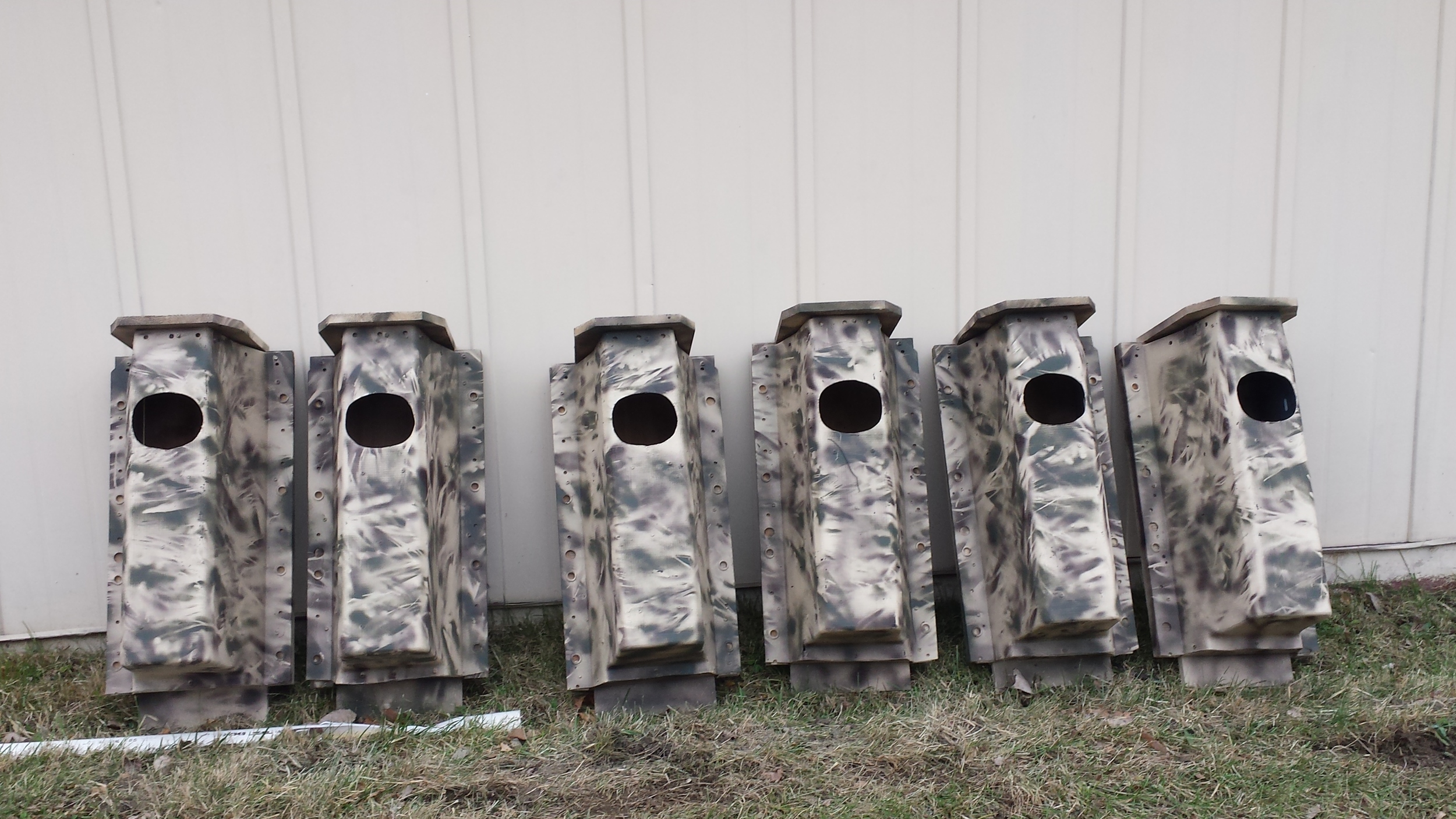 DETROIT, MICHIGAN - General Motors, ROC Detroit project champion and US BCSD member, is repurposing Chevy Volt battery covers into Scaly-sided merganser nest boxes. The Scaly-sided merganser is endangered, and General Motors is working through the US BCSD and Wetlands International to help these beautiful waterfowl. John Bradburn, chairman of the US BCSD Executive Committee, designed and built the boxes after discussing the requirements with Wetlands International. John based his design on similar nest boxes built for the North American Wood Duck, however the size is scaled up to nearly three feet tall since the Scaly-sided merganser is larger. 10 boxes have been sent to China so far.
By Andrew Mangan, US BCSD and Marian Chertow, Yale University
Modern society has an intense thirst for physical resources to meet daily human needs, wants, and desires, which, in turn, is supported by the businesses and industries that collectively service these requests. The processes that provide physical resources generate significant quantities of waste at every step of the way, exposing us all to vast environmental, energy, and resource availability challenges. Once again much of the world is focusing on global climate with the upcoming meetings in 2015 in Paris following another year of bewildering weather and readily apparent land change. Years of research have shown that waste reduction is repeatedly associated with lowering greenhouse gases (GHGs) that exacerbate climate change. It is time we recognize the good actors and reward them by making waste reduction a recognized carbon reduction strategy in the upcoming UN climate negotiations.
While waste and materials management have not been on the front line of climate solutions, current emphasis on lifecycle approaches reveals that it is time to reconsider their role. If we break the climate problem down into different economic sectors, we see that energy and transport are nearly 2/3 of where GHG emissions originate – based primarily on fossil fuels burned to generate electricity and also to power vehicles (Figure 1). Yet, a recent US EPA report suggests that we slice the pie chart a bit differently to increase understanding of what EPA now calls “materials management” described as “serving human needs by using and reusing resources most productively and sustainably throughout their lifecycles.” (source) From a materials management perspective, the second chart below, based on a systems rather than sectoral approach, becomes quite relevant (Figure 2). As seen here, materials management systems for providing food and other goods accounts for 42% of GHG emissions. This figure embraces a lifecycle perspective that considers the extraction of natural resources, production, transport and disposal of food and other goods.

Source: US EPA 2009. Opportunities to Reduce Greenhouse Gas. Emissions through Materials and Land Management Practices
Great work is going on in industry toward materials management that not only creates new revenues and saves on landfill, but also reduces climate impacts when virgin materials can be avoided and efficiency can be increased. Some interesting ways that industries we work with are having success fall into three categories: internal reuse and recycling within a firm or facility, online material trading with other firms, and trading across unrelated facilities in the same geographical area. These are discussed below:
Internal reuse and recycling within a firm or facility – In addition to traditional materials management that has gone on as long as there has been industry, the US Business Council for Sustainable Development is seeing an upsurge in members paying careful attention to by-product reuse. General Motors and Nike, for example, both operate with the mindset that waste is merely a resource out of place, and both have set billion dollar goals based on material reuse. They emphasize improving material yields, reusing remaining scrap in a closed loop back into their own products and maximizing recycling of the rest.
Recognizing and rewarding the climate benefits of material reuse is needed now to provide a positive path for decarbonized economic progress. Characterizing the values, both direct life cycle benefits and broader societal advancements, achievable through this frugal, inclusive approach will be necessary. But related systems exist and can be applied, tailored for materials management. Devising such a system is not a simple matter and would take a ramp up in our understanding of GHG accounting and the most recent climate models. This move would also require taking on the types of issues that have been difficult to resolve with, for example, the Clean Development Mechanism regarding additionality – so that waste managers would not be rewarded for “business as usual” but rather for innovative development. By adopting materials management as a core strategy of the climate agreement, governments will be empowering companies, communities and countries to move toward a more circular economy where wastes become resources that can be used over and over again as they are in the natural world. At the same time, adopting rewards for carbon reductions in materials management would bring a whole new community into the realm of climate solutions.
Andrew Mangan is Co-Founder and Executive Director of the United States Business Council for Sustainable Development and Marian Chertow is Associate Professor of Industrial Environmental Management at the Yale School of Forestry & Environmental Studies.
We've been especially busy over the last few weeks with our project in Austin - the Austin Materials Marketplace. We're currently up to 27 participating businesses and organizations, ranging from large corporations like 3M and Spansion, down to local nonprofits like Any Baby Can. On 11/12, we hosted a live Google Hangout to look specifically at brewery by-products and waste, and talk about some good reuse solutions we're itching to help facilitate in Austin. Watch the recording below, and get in touch with us if it inspires any creative thinking.
And on 11/14 we hosted a medical devices-specific Google Hangout on how to transform medical device manufacturing waste into product. We discussed current industry best practices, some of our biggest waste challenges, and chatted about some interesting potential reuse opportunities. Watch below or click the Youtube link.
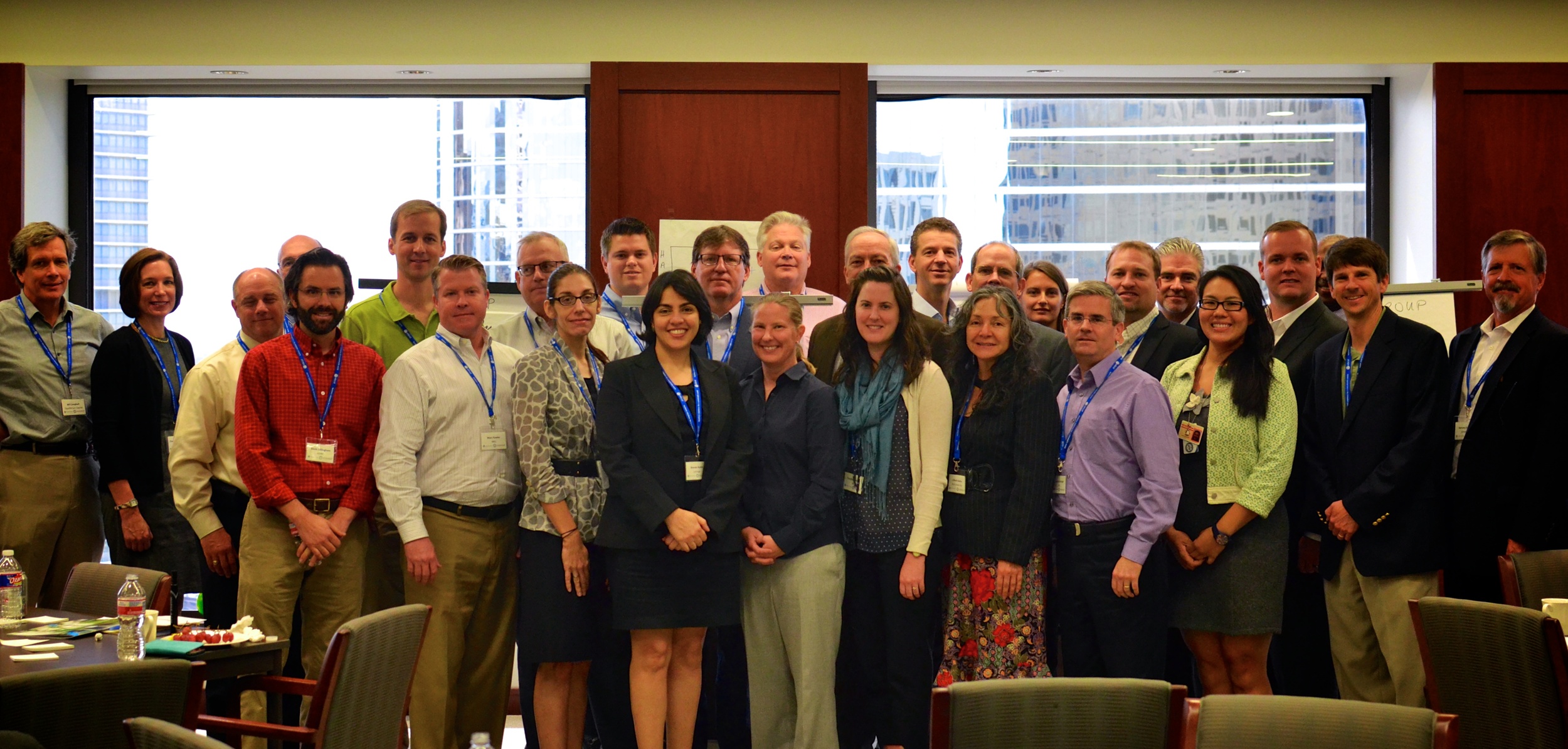 Houston / Geneva, October 10, 2014 – The World Business Council for Sustainable Development (WBCSD), the United States Business Council for Sustainable Development (US BCSD) and partners in the WBCSD’s Energy Efficiency in Buildings market transformation initiative convened a deep-dive workshop exploring ambitious and actionable strategies for reducing energy consumption in buildings by 30% or more in the Houston market.
This workshop, known as an “EEB Laboratory”, was timely following the announcement by Houston’s Mayor Annise Parker, at the occasion of the UN Summit on Climate Change on September 23, that by 2050, Houston - America's energy capital - would cut CO2 emissions 80% from 2005 levels, the same as New York City's pledge.
A 30% energy saving in the commercial sector alone could translate into replacing 10 mid-size power plants and adding almost a billion dollars to the Houston economy.
During three days, a committee of experts made up of representatives from the WBCSD member companies and partners discussed with developers, investors, designers, engineers, facility operators and tenants how to define the business case for investments in energy efficiency of buildings for different stakeholder groups in the building value chain. Four topics were at the heart of the debate:
[themify_hr color="light-gray" width="70%" border_width="1px" ]
[themify_col grid="4-1 first"]
[/themify_col]
[themify_col grid="4-1"]
[/themify_col]
[themify_col grid="4-1"]
[/themify_col]
[themify_col grid="4-1"]
[/themify_col]
[themify_hr color="light-gray" width="70%" border_width="1px" ]
The Laboratory identified ways to accelerate investments through awareness-raising, innovative financing approaches, improved operational performance to achieve energy savings, and the introduction of policies for increased market transparency.
 The Laboratory also revealed there has been strong progress with the corporate sector driving demand for energy efficient Class A buildings. Meanwhile, the City of Houston is implementing energy efficiency programs for public buildings, developing progressive building energy codes and targeted incentive schemes are working well.
A detailed summary including a plan to foster the widespread uptake of energy efficiency in buildings in the Houston market will be published shortly.
“Houston has a tradition of private sector leadership – it is the ideal place to show that energy efficiency in buildings makes business sense”. - Andy Mangan, Executive Director, US BCSD
Roland Hunziker, Director Sustainable Buildings at the WBCSD, said: “The EEB Laboratory in Houston was the fourth such event led by the WBCSD after San Franciso, Shanghai and Warsaw. More Laboratories will be held in developed and emerging markets around the globe in order to surface good practice examples and foster learning between metropolitan and regional markets.”
With the Manifesto for Energy Efficiency in Buildings, the WBCSD provides the opportunity to any building owner, developer, investor or tenant to publicly state their commitment to enhance energy efficiency in their building stock, within a self-determined scope. An Energy Efficiency Toolkit is also freely available to help large owners, tenants and real estate management companies identify financially viable, yet ambitious, energy efficiency measures across a given building portfolio.
Other Press: Houston Chronicle - October 10, 2014 - Energy Efficiency 'Makes Business Sense' Houston Chronicle - October 7, 2014 - Classy old buildings strive for modern energy efficiencies