
New Haven, CT – June 14, 2016. The United States Business Council for Sustainable Development (US BCSD) and the Restore the Earth Foundation announced their Strategic Alliance for landscape-scale restoration and a $1 million Collaborative Fund today at the US BCSD, World Business Council (WBCSD), and Yale Center for Business and the Environment meeting at Yale University. The funds will be used to restore 1,000 acres at Pointe-aux-Chenes Wildlife Management Area, Louisiana, the largest land area that provides the last line of defense protecting more than 250,000 people, including the United Houma Nation and Pointe-au-Chien Indian Tribe, from the threat of storms and land loss. The region is home to threatened and endangered species, commercial and recreational fisheries, and a rich diversity of wildlife and birds. “We have the potential to bring back essential ecosystems by investing in restoration of degraded land, forests, and coastlines,” said Restore the Earth Co-Founder and Executive Director PJ Marshall. “These ecosystems offer diverse physical, biological, and socioeconomic resources. Millions of people and businesses depend on them. Restoration can also enhance and protect the overall health, resiliency, and sustainability of local communities—especially in the face of the potentially devastating effects of climate change.”
By contributing to the Collaborative Fund, corporate partners are able to demonstrate and report on the value their investment creates. Restore the Earth’s EcoMetrics™ Model quantifies the full financial value of the restoration’s environmental, social, and economic impacts, aligned with the International Integrated Reporting Council (IIRC)’s Framework. Their model proves that for every $1 invested in restoration, more than $9 in value is created. Corporate partners also benefit from third-party-verified carbon, nitrogen, water, and phosphorus offsets.
The US BCSD Louisiana Water Synergy Project will serve as the platform for this joint work. The project, which began in May 2012, provides a forum for business leaders to collaborate on efforts to address water quality, quantity, and coastal resiliency. The project includes 23 companies from a wide range of industrial sectors working with Lake Pontchartrain Basin Foundation, The Nature Conservancy, Louisiana Department of Environmental Quality, and Louisiana Department of Agriculture and Forestry.
“Restoring our degraded lands is critical for society, for the environment, and for business,” said Susan Fernandes, Manager of the US BCSD Louisiana Water Synergy Project. “Restore the Earth has a proven track record for landscape-scale restoration and their EcoMetrics model supports the business case for these investments by providing verifiable, monetized metrics for the social, economic, and environmental value created.”
This investment is the first stage of Restore the Earth’s 15-year project to restore “North America’s Amazon,” a once-forested area that was similar in scale to the Amazon Rainforest. The restoration project will break ground in October 2016 at Pointe-aux-Chenes Wildlife Management Area.
If you are interested in learning more about the US BCSD/Restore the Earth Collaborative Fund or Restore the Earth’s EcoMetrics Model, accounting for the value of landscape-scale restoration, contact Restore the Earth’s PJ Marshall or US BCSD’s Susan Fernandes.
About United States Business Council for Sustainable Development (US BCSD) The US BCSD is an action oriented and member-led nonprofit business association that harnesses the power of collaborative projects, platforms and partnerships to develop, deploy and scale solutions to ecosystems, energy, materials and water challenges. For more information, visit http://usbcsd.org.
About Restore the Earth Foundation Restore the Earth Foundation, Inc. is 501(c)(3) not for profit, its mission is to restore the Earth’s essential forest and wetland ecosystems, delivering outstanding environmental, social and economic returns. Restore the Earth has secured over $35 million from private and public sources and has successfully restored over 45,000 acres along America’s Gulf Coast. Today, these reforested areas have restored habitat, created jobs, and brought back the landscape’s green attributes and benefits that contribute so much to the nation’s communities and culture. To learn more, please visit www.restoretheearth.org.
About the Restore the Earth EcoMetrics™ Model The EcoMetrics™ Model measures the full value for each environmental, social and economic outcome produced by ecosystem restoration, and reports on those outcomes in monetary terms.
Restore the Earth provides a formal detailed report to funders in a format ready for 3rd party audit and in a form that accounts for intangible assets on the funder’s balance sheet to support the business case for investment. This also allows funders to take credit for GHG-offsets, water quality offsets and other environmental benefits produced, in perpetuity; and if desired, they can use the environmental offsets to mitigate the portion of their climate footprint that cannot be offset at source.
The EcoMetrics™ Model is compliant with the global standards for ecosystem services, Restore the Earth’s work creates value with outcomes that truly benefit communities by enhancing quality of life and sustaining the factors that provide for environmental, social and economic resiliency.
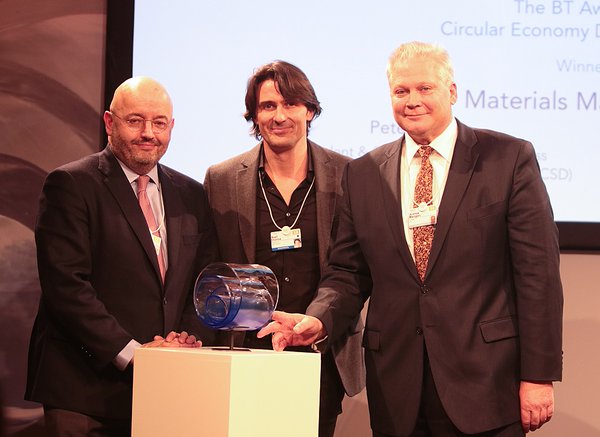 MOMENTUM BUILDS POST-DAVOSAs you've probably seen by now, the U.S. Materials Marketplace was recognized with a prestigious "Circulars" Award at this year's World Economic Forum Annual Meeting in January, kickstarting a considerable amount of momentum for the project both in the US and around the world. Scroll down through our past postings to see recent news articles and social media activity.

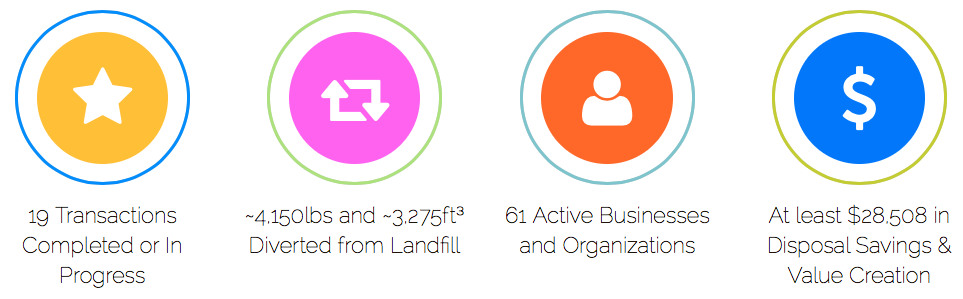
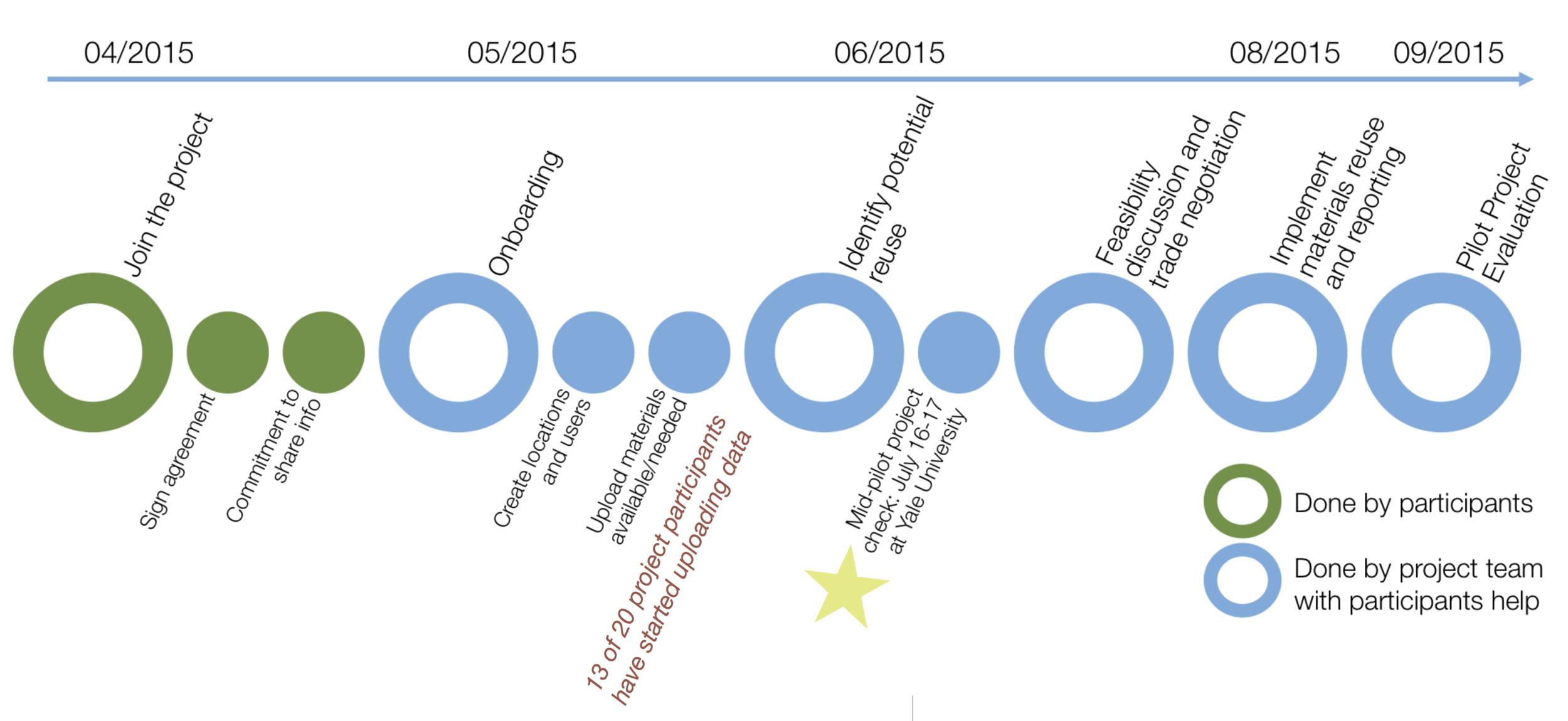 As we near the end of August 2015, the National Materials Marketplace pilot has nearly wrapped up the initial data collection phase and has marched forward into analysis, synergy identification and the early stages of synergy facilitation. This positions us well to close out the pilot phase of the project in mid-September and launch a formal report with our results, learnings and path forward.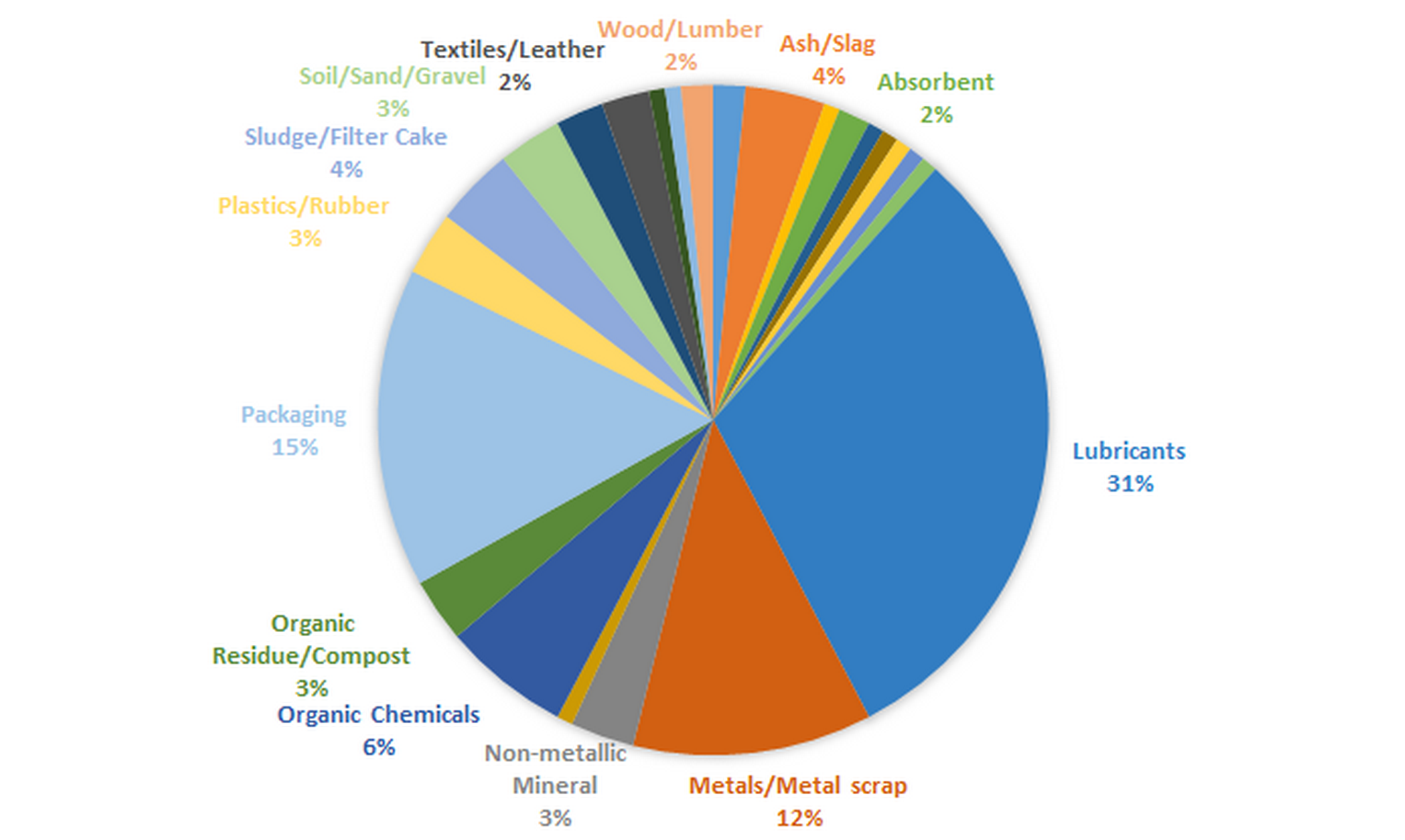

 This July 16-17 at Yale University, we’ll be asking you for your input on how financing can help scale up our collaborative sustainability projects and initiatives. We’ve assembles a small group of experts from finance and investment institutions, as well as government-funded green banks, to work with you on July 17th and respond to your experiences related to financial opportunities and barriers to scaling sustainability initiatives. We’ll discuss developments in debt, equity and unconventional financing tools.

 The United States Business Council for Sustainable Development (