

In a multi-part release over the next few weeks, we’ll be posting a series of updates exploring key themes and recent outcomes from the Louisiana Water Synergy Project. While these themes are Louisiana-specific, all of them can be applicable to most watersheds in the US. On July 30th, the Louisiana Water Synergy Project held its quarterly meeting in Baton Rouge, Louisiana, bringing over 35 representatives of academia, industry, service companies, and regulators together to discuss their shared interests in water quality, quantity, storm water management, and coastal resiliency.
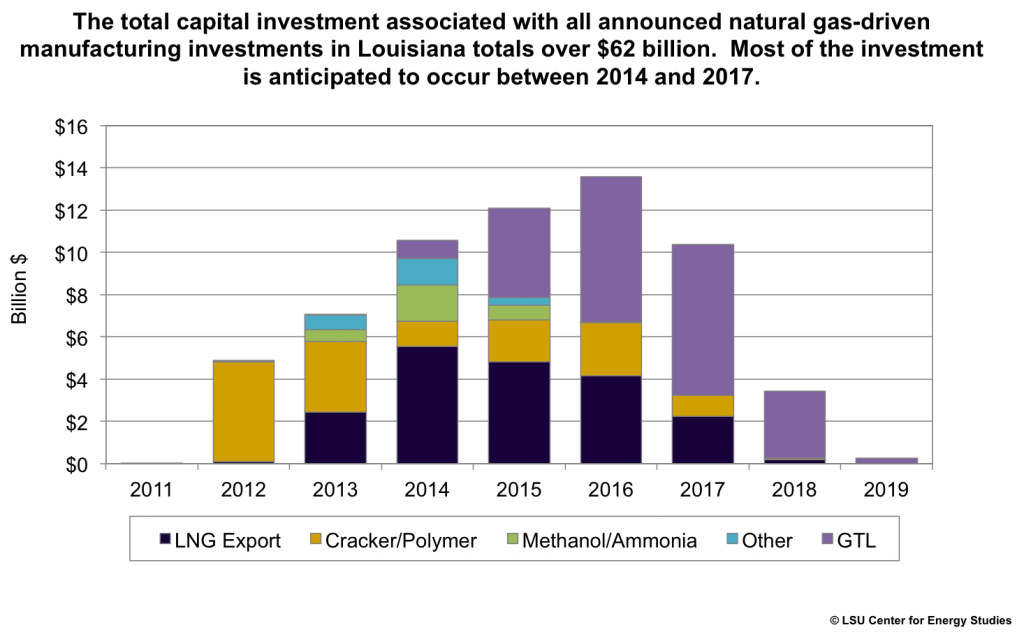 The LSU Center for Energy Studies estimates $62 billion in industrial investments are planned for Louisiana including new facilities and expansions of existing facilities, with a large portion coming from the chemical, refining, and manufacturing sectors. The Center predicts most of the development will occur along the Mississippi River corridor between Baton Rouge and New Orleans - the heart of the Water Synergy Project area.
David Dismukes, Associate Director at the Center, is examining the potential economic impacts associated with these planned capital investments in Louisiana over the next nine years, which are driven in large part by the increased availability and low cost of natural gas.
Facilities highlighted for expansions or new construction include liquid natural gas (LNG), gas to liquid (GTL), and chemical production including methanol, ammonia, and polymer. Water is used to re-vaporize LNG, as a feedstock for chemical production, and in the transport of goods to terminals. Each use is accompanied by potential water management challenges; and as industry grows, water use will intensify.
An influx of industrial development comes with a substantial increase the number of jobs, and workers to fill those positions. Louisiana will not only experience economic development, but also infrastructure challenges as the population rises. Non-point source pollution is often solely attributed to agriculture, but according to the EPA, the second leading source of water quality impairment in the United States is municipal point sources, followed by changes in land use and urban runoff. (source) As neighborhoods expand, impacts to water quality and quantity will follow.
The scale of the development projected for Louisiana is unprecedented and exponentially raises the importance of cross-sector communication and management of water resources. The Louisiana Water Synergy Project is led by members of oil and gas, chemical, energy, alumina, steel, cement, fertilizer industries and service companies. Representation from the agriculture sector is expected to join soon. Through our meetings individual water challenges are revealed to be common issues, best management practices are shared, and unified strategies are developed; strategies that will be crucial for effective water management in the years to come.

 The Texas PACE Act places emphasis on energy and water saving retrofits in industrial and commercial properties, effectively incentivizing some of the largest energy consumers in the country to reduce their consumption. Texas consumes more electricity than any other state, and industry accounts for almost half of that energy use, according to the United States Energy Information Administration.
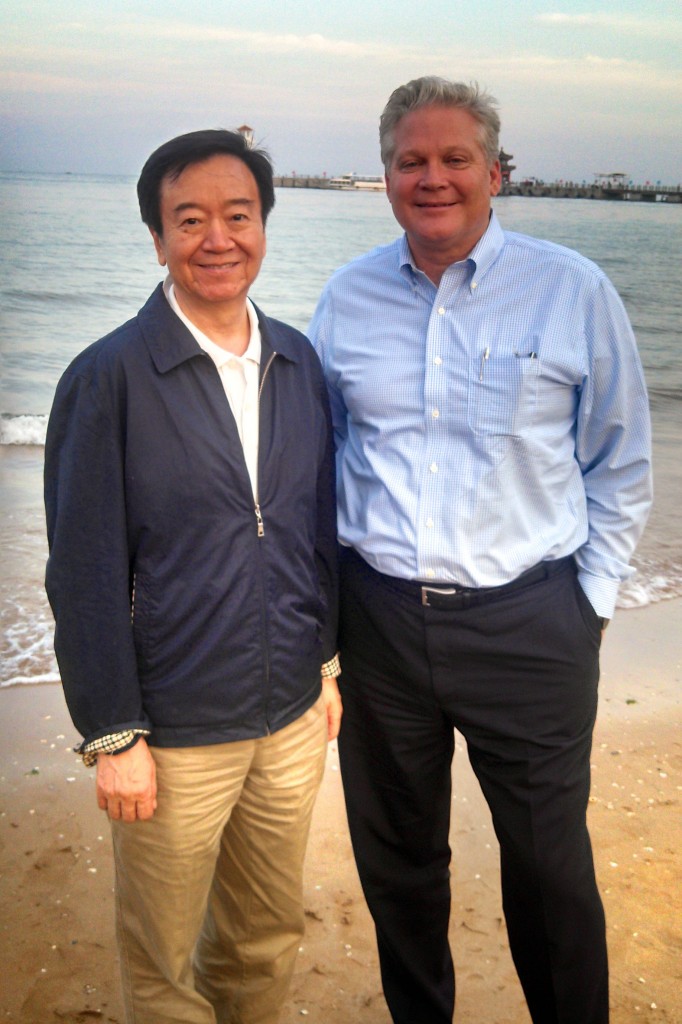 Andy Mangan, US BCSD Executive Director, is in China this week meeting with China Business Council for Sustainable Development staff, member companies, and government representatives working on the
 The US BCSD is headquartered in beautiful Austin, TX, and we're happy to have some wonderful friends and colleagues around the city. If you're in Central Texas, join
 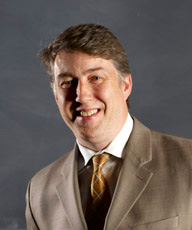 Paul T. Anastas is the Teresa and H. John Heinz III Professor in the Practice of Chemistry for the Environment. He has appointments in the School of Forestry and Environmental Studies, Department of Chemistry, and Department of Chemical Engineering. In addition, Prof. Anastas serves as the Director of the Center for Green Chemistry and Green Engineering at Yale.
 John is manager of waste-reduction efforts at General Motors. In this role, he leads the company's landfill-free initiative, which has resulted in 99 GM operations around the world that reuse, recycle, and convert to energy all wastes from daily operations. John is an established expert in waste reduction and recycling, and frequently mentors other companies pursuing zero-waste goals. John's responsibilities also include directing the company's design-for-the-environment program, implementing sustainable processes and technologies that reduce the company's environmental impact and costs.
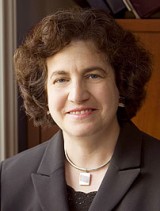 Marian Chertow is Associate Professor of Industrial Environmental Management and has been Director of the Industrial Environmental Management Program at the Yale School of Forestry and Environmental Studies since 1991. Her research and teaching focus on industrial ecology, business/environment issues, waste management, and environmental technology innovation. Primary research interests are 1) The study of industrial symbiosis including geographically-based exchanges of wastes, materials, energy, and water within networks of businesses. 2) The potential of industrial ecology to underpin ideas of the proposed Circular Economy law in China. 3) The application of innovation theory to the development of environmental and energy technology.
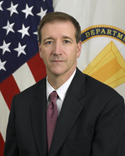 Richard Kidd became the Deputy Assistant Secretary of the Army (Energy & Sustainability) on October 25, 2010. This is his third assignment as a Senior Executive within the Federal Government. In this position he is responsible for overall program direction, establishment of policies, development and refinement of strategies, and oversight for implementation of all programs and initiatives related to Energy Security and Sustainability within the Army. As the Army's Senior Energy Executive, Mr. Kidd coordinates and integrates both installation and operational energy programs and strategies.
 Anthony Leiserowitz, Ph.D. is Director of the Yale Project on Climate Change Communication and a Research Scientist at the School of Forestry and Environmental Studies at Yale University. He is a widely recognized expert on American and international public opinion on global warming, including public perception of climate change risks, support and opposition for climate policies, and willingness to make individual behavioral change.
 Participants of the Louisiana Water Synergy Project met Monday, May 6th at Loyola University, New Orleans.
As many participants come from different sectors of industry but face similar challenges regarding water quality and quantity issues, collaborative thinking led to creative actions to address those challenges. For example, a user of traditional water treatment shared that monitoring dissolved oxygen levels in their mixing tanks helped reduce Nitrogen output, while those experienced with using wetlands as a natural nutrient and sediment removal process extolled the nutrient-cleaning benefits of their approach. Despite different approaches to treatment, both expressed interest in nutrient credit trading.
Participants of the Louisiana Water Synergy Project met Monday, May 6th at Loyola University, New Orleans.
As many participants come from different sectors of industry but face similar challenges regarding water quality and quantity issues, collaborative thinking led to creative actions to address those challenges. For example, a user of traditional water treatment shared that monitoring dissolved oxygen levels in their mixing tanks helped reduce Nitrogen output, while those experienced with using wetlands as a natural nutrient and sediment removal process extolled the nutrient-cleaning benefits of their approach. Despite different approaches to treatment, both expressed interest in nutrient credit trading.
 The US BCSD, WBCSD, and deans and professors from Yale School of Management and the School of Forestry and Environmental Studies met last week to accelerate sustainable solutions through business education. This partnership opportunity aligns the WBCSD global business community, its Regional Network, and the Global Network for Advanced Management to pursue co-development of transformative business education, extensive research opportunities, and regional project collaboration.
 The US BCSD's
  The mayor's offices of
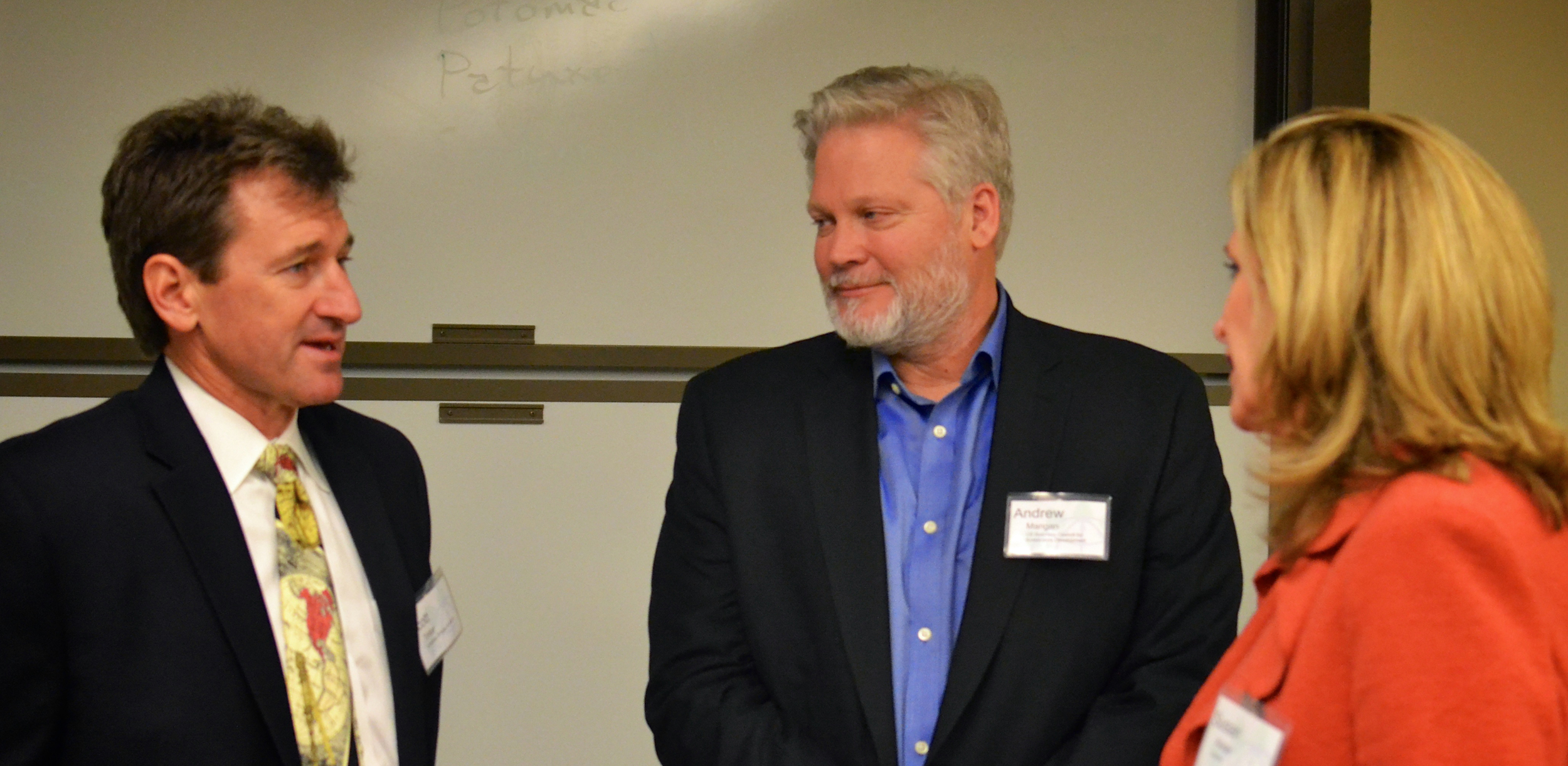 US BCSD members and other sustainability experts came from around the country to the University of Texas at Austin to grapple with the complexities of scaling up solutions to Vision 2050 through collaborative learning and real, actionable regional projects.
 Special thanks to all our members and colleagues who made the trip down to Austin, TX for our Winter Meeting 2013. Look for meeting notes and presentations to be posted later next week, and keep an eye out for specific follow-ups from our staff shortly.